
Best Environmental Initiative 2026

Best Environmental Initiative: Assicurazioni Generali
Feature interview
Small businesses are the first to be hit when disaster strikes in Asia and the last to be insured, which is why Generali’s UNDP partnership has focused squarely on them.
By Gigi Wong
When a flash flood tears through a market town in Nepal or a heatwave settles over Bangkok for a fortnight, the businesses that suffer first are rarely the ones with a risk manager on staff. They are the noodle stall, the two-truck logistics firm, the garment workshop with a dozen employees. They are also, collectively, the economy: micro-, small and medium-sized enterprises (MSMEs) account for between 94% and 99.9% of all businesses in South and Southeast Asia, and in India alone number more than 73.4 million.
Yet an estimated 95% of them have no financial protection when disaster or market shock strikes. That figure sits at the heart of the collaboration between Generali and the United Nations Development Programme (UNDP), which began in 2022 and has since produced research, digital tools, innovation challenges and a growing roster of locally built insurance products across the region.
As the winner of this year’s Best Environmental Initiative, Generali is betting that the fastest route to climate resilience in Asia runs through the millions of small enterprises the insurance industry has long struggled to reach.
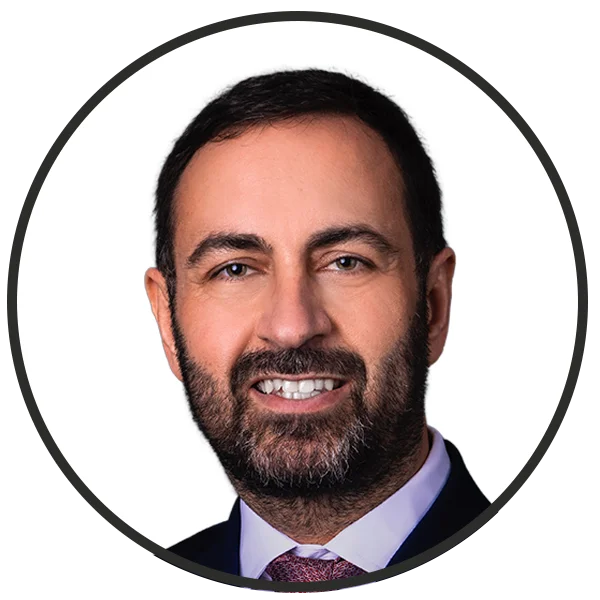
“From our presence in seven markets across Asia, we understood that small businesses were highly vulnerable to climate and other risks but often lack the financial protection to recover after a crisis,” says Giuseppe Randazzo, Chief Communications & Public Affairs Officer, Asia at Generali. “Asia is the world’s most disaster-prone region, and frequent floods, droughts, cyclones and heatwaves are threatening the lives, crops, infrastructure and supply chains that are powering these businesses.”
The problem, he argues, is not only that cover is scarce but that what exists is often poorly designed for small operators. Closing that gap meant going back to first principles: asking small business owners what actually keeps them awake at night.

The results were not always what a climate programme might expect. When Generali and the UNDP surveyed Thai MSMEs about their most disruptive risks, the top answer was not flooding or storms. It was illness.
On closer inspection, the two were connected. Extreme heat and air pollution, both worsening with climate change, were taking a steady toll on owners and employees, and the consequences showed up as absenteeism, revenue losses and rising costs rather than as a single catastrophic event.
The response was the Thai MSME Health & Well-being Toolkit, a self-assessment that lets a business input basic information and receive an estimate of its exposure to health and pollution-related risks, along with recommendations tailored to its size and sector. A logistics firm, for instance, might be pointed towards eco-driving training and regular engine maintenance, which cut both emissions and the pollution its own drivers breathe. The tool also directs users to public health programmes and affordable health insurance products.
“What we learned from the insight that led to the creation of this tool is the need to understand what MSMEs view as the most disruptive risks to their businesses, and to create accessible tools that would point them to resources and targeted support mechanisms that can help them make informed decisions,” Randazzo says.
It is a lesson with wider application. Insurers have a habit of designing products around the perils they can model, instead of the ones their customers experience. Starting with the customer’s own risk ranking produced something more useful, and quietly made the business case for prevention in language a shopkeeper understands.
The same humility runs through the Insurance Innovation Challenge, which Generali and the UNDP have now run in Malaysia and Thailand, with a third edition recently launched in India. Winners receive funding and technical assistance to develop solutions aimed squarely at MSME pain points. One early participant has gone on to build a microinsurance platform now serving around 60,000 small businesses.
The solutions coming through are instructive. In Malaysia, VSure launched a fully digital platform offering affordable microinsurance to MSMEs. In Thailand, TruNord Technologies is embedding micro-health and life cover directly into payroll systems, merchant networks and gig-work platforms, so that owners and workers can enrol without extra paperwork. Fellow winner Clean Technology and Innovation’s SMEPrakanp.ai uses artificial intelligence (AI) to help owners compare and select packages suited to their particular risks.
What links them is distribution. Local entrepreneurs grasped that the barrier for a small business was rarely the concept of insurance but the friction of buying it. Put cover inside a tool the owner already uses, and take-up follows. “The result has been accessible protection and knowledge from the ground on how solutions can meet the practical needs of MSMEs,” Randazzo says.
For catastrophe risk itself, the partnership’s research leans heavily on parametric insurance as a way to chip away at a protection gap it puts at US$1.8 trillion. The appeal for a small business is practical.
“Traditional indemnity insurance policies require damage assessments before they can pay out a claim,” Randazzo explains. “This process can take a while to complete, especially if many businesses have been affected at the same time, and may delay the business’s recovery.”
A parametric policy pays out once a pre-agreed trigger, such as rainfall or wind speed, is met. Nevertheless, Randazzo explains that parametric cover is a complement to indemnity insurance, not a replacement, and it depends on an ecosystem of regulators, data providers, development partners and insurers willing to invest in both education and infrastructure. That is work still in progress across much of the region.
The environmental credentials that earned Generali the award rest partly on a simple idea: a business that reduces its own risk should pay less to insure it. The SME Loss Prevention Framework, a digital tool launched first in Malaysia and focused on flood risk, puts Generali’s technical expertise in the hands of local entrepreneurs. As they harden their premises, their exposure falls.
“This reduces their risk, which can in turn result in lower insurance premiums,” Randazzo says. “We are also hoping to unlock a virtuous cycle where investments in risk reduction are rewarded.”
The framework sits alongside SME EnterPRIZE, Generali’s flagship programme promoting sustainable business models, which has now been extended into Asia. Randazzo sees the two as mutually reinforcing: awareness of sustainability makes owners more receptive to resilience tools, and resilience tools make the sustainability case concrete.
None of this happens without significant efforts in engagement, awareness and collaboration. The partnership has engaged more than 6,000 stakeholders from governments, local institutions and the financial sector, and presented its work at over 20 global forums, from COP28 in Dubai to New York Climate Week.
Randazzo’s advice to other insurers considering a similar arrangement is direct: match what each side is actually good at. “The key is to align the public sector’s expertise in inclusive development and local markets with the private sector’s capacity for innovation and execution.” The UNDP brings country presence and government relationships; the insurer brings product design and risk management. Neither substitutes for the other.
The partnership is now active in India, with Indonesia next in line, and advocacy work being reinforced in Italy, Germany and Spain. Further afield, Generali and the UNDP are working with the United Nations Industrial Development Organization (UNIDO) on parametric cover for Uganda’s smallholder coffee farmers, protecting a commodity chain that ends in European cafés but begins with growers acutely exposed to climate volatility.
Asked what success would look like, Randazzo returns to the people the programme is meant to serve. The goal, he says, is “making resilience more accessible, risks more manageable, and communities better prepared for what lies ahead”.